
The storm has moved on, but the questions are just beginning. Did the hail damage your shingles? Did those strong winds loosen something you can’t see from the ground? Or is that small ceiling stain a sign of a much bigger problem?
When it comes to storm damage roof repair, knowing what to do in the hours after a storm helps protect your home and make the insurance process much smoother.
At Bluegrass Roofing & Consulting, we help homeowners across Central Kentucky, including Lexington, Georgetown, and surrounding communities, recover from hail, high winds, and fallen tree damage. With severe storms being a regular part of life in the Bluegrass region, it’s important to know what to look for and when it’s time to call in the pros. In this guide, we leverage our experience to break down the different types of storm damage, what to do if your roof has been damaged in a storm, and when you need to call a professional storm damage roof repair contractor.
What Storm Damage Actually Looks Like on a Kentucky Roof
Some of the most expensive storm damage starts with signs that are easy to overlook. Here’s what to look for after severe weather rolls through Central Kentucky.
Hail Damage: What to Look for on Shingles, Gutters, and Flashing
One hail damage clue homeowners often overlook is their gutters. If they’re dented after a hailstorm, your shingles may have taken more damage than you realize. That’s why we always recommend an inspection after significant hail, even if nothing looks out of place from the ground. Look for dents in metal flashing and downspouts, loose granules collecting in your gutters, or soft, bruised spots on asphalt shingles.
Wind & Debris Damage: The Damage You Can See
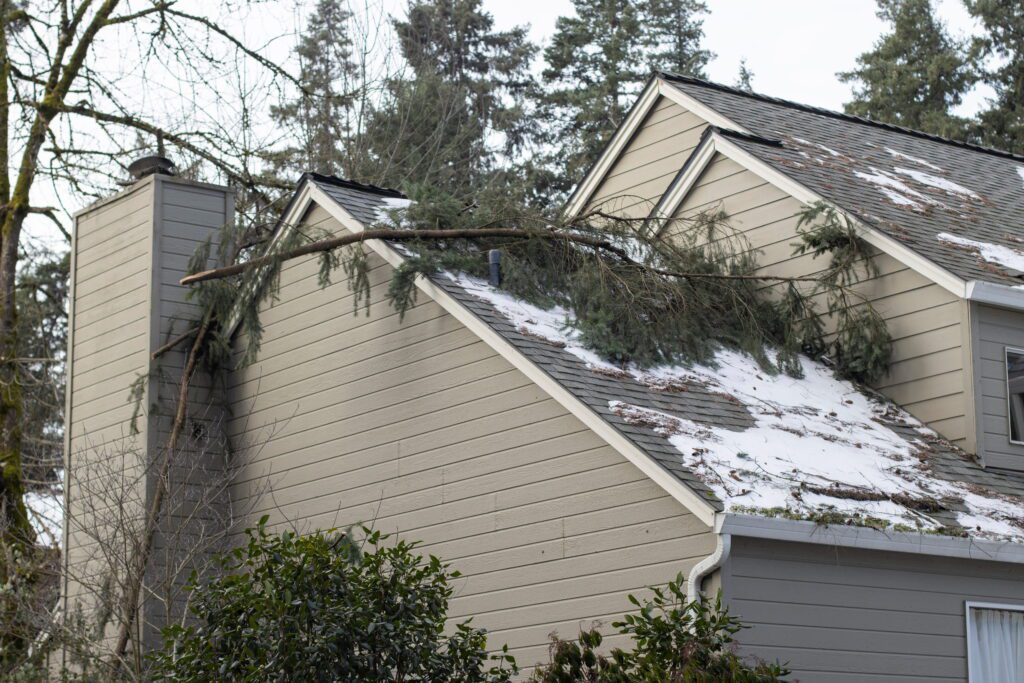
High winds often leave behind missing shingles, lifted edges, damaged ridge caps, or exposed underlayment. Fallen branches can cause even more serious damage by puncturing the roof and creating an opening for water.
If a tree limb has broken through your roof or water is actively entering your home, temporary protection should be your number one priority. And if your home has tile roofing, check around for any cracked or shifted tiles, as the storm affects them differently from asphalt shingles.
Hidden Damage: Why Some Storm Damage Isn’t Visible Right Away
Hail can weaken shingles beneath the surface, and strong winds can loosen roofing materials enough to let water work its way underneath over time. One of the biggest surprises for homeowners is hearing that their roof was damaged even though it looked perfectly fine from the yard. Always schedule a professional roof inspection after a hailstorm, especially if your neighborhood was hit hard.
Step-by-Step: What to Do in the 48 Hours After a Storm
Once the storm has passed, resist the urge to climb onto the roof or start cleaning up. Taking these steps first can help protect your home and support your insurance claim.
- Document Everything Before You Touch Anything: Before moving debris or making temporary repairs, photograph visible damage from the ground. Capture your roof from multiple angles, along with damaged shingles, gutters, fallen limbs, and any interior signs of water damage. Commercial property owners should also document rooftop equipment, skylights, and membrane seams.
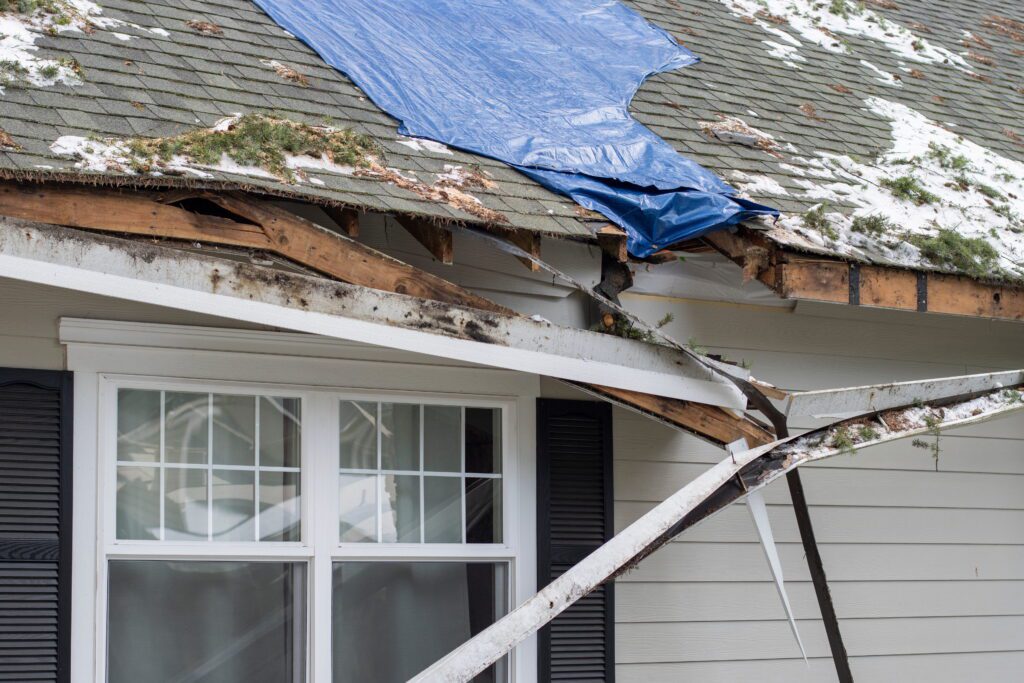
- Place Emergency Tarps Over Active Leaks: If your roof has been punctured or water is getting inside, temporary tarping can help prevent further damage. Avoid climbing onto a wet or unstable roof yourself. Our emergency roof repair team secures the damaged area until permanent repairs are made.
- File Your Insurance Claim: Contact your insurance company as soon as possible with your policy number, storm date, and photo documentation. Filing early helps keep the claims process moving.
- Request a Professional Roof Inspection: Schedule a roof inspection before the insurance adjuster arrives when possible. A storm damage roof repair company can identify hidden damage and provide a written assessment to compare with the adjuster’s estimate.
Storm Damage Roof Repair vs. Full Replacement: How to Know Which You Need
“Can the damage be repaired, or do I need a whole new roof?” This is usually the first question homeowners ask us. And the answer depends on how much damage the storm caused and the overall condition of your roof.
When Spot Repair Is the Right Call
A repair often makes sense when the damage is limited to one area and the rest of the roof is still in good condition. Roofs that are newer and have healthy shingles with good granule coverage can often be restored without replacing the entire system.
Your contractor should also confirm that the roof decking beneath the damaged area remains structurally sound before recommending a repair.
When Full Replacement Makes More Sense
A full replacement may be the better long-term investment if storm damage is spread across the roof, your shingles have significant granule loss, or your roof is nearing the end of its lifespan. Replacement is also common when matching shingles are no longer available, making repairs difficult to blend with the existing roof.
If widespread damage means replacement is the better option. Take a few minutes to learn about the average cost to replace a roof in Kentucky and set your expectations as you review estimates and insurance coverage.
How to Choose the Right Storm Damage Roof Repair Company in Central Kentucky
The contractor you choose can have just as much impact on the outcome as the repair itself. After a major storm, take a few extra minutes to vet a trustworthy storm damage roof repair contractor.
The Non-Negotiable Contractor Checklist
Finding a roofer after a storm can feel overwhelming, especially when your phone is ringing and contractors are knocking on your door. A few simple checks can help you separate reputable local companies from the ones just passing through town:
- Kentucky Contractor License: Verify they’re properly licensed through the state.
- Local Presence: Choose a company with an established Central Kentucky office.
- Insurance Coverage: Ask for proof of general liability and workers’ compensation insurance.
- Written Scope of Work: Your estimate should clearly outline the materials, repairs, timeline, and payment schedule.
- Manufacturer Certifications: Certifications from manufacturers like GAF or Owens Corning can provide you with access to enhanced warranty options.
- Storm Repair Experience: Ask for references from homeowners they’ve helped specifically for storm damage.
The Red Flags That Signal a Storm Chaser
Big storms tend to attract roofing companies from all over. While some do quality work, others disappear as quickly as they arrived. If someone pressures you to sign a contract on the spot or asks for a large payment before work begins, that’s usually a good reason to slow down and ask a few more questions.
You should also think twice before signing an Assignment of Benefits (AOB) before your roof has even been inspected, as it can transfer certain insurance rights to the contractor.
Any reputable local roofer gives you time to review your options, answer your questions, and provide a written estimate before any work begins.
Why Local Experience in Central Kentucky Matters for Storm Work
Living in Central Kentucky means your roof deals with hail, high winds, heavy rain, and winter weather. A local contractor understands seasonal weather patterns because they’ve been repairing roofs here for years.
Whether you need storm repairs in areas like Lexington or Georgetown, working with a local contractor means choosing a team that’s here before the storm, during the repairs, and ready to support you and your home long after the job is done.
While this guide is geared toward homeowners, Bluegrass Roofing & Consulting also helps businesses recover after severe weather. From commercial roof repairs to gutter installation, our team understands the challenges storms create for properties of all types across Central Kentucky.
FAQ — Storm Damage Roof Repair in Kentucky
The short answer is: don’t wait. While many Kentucky homeowners policies give you up to a year to report storm damage, some have shorter deadlines. Filing your claim sooner gives you one less thing to worry about and helps keep the process moving.
Usually, yes. If the damage was caused by hail, wind, or a fallen tree, there’s a good chance it’s covered. Damage that happens over time from normal wear and tear is a different story. If you’re unsure, we can inspect the roof and help you understand what you’re looking at before you talk to your insurance company.
No. Storm damage isn’t always obvious, and walking on a wet or damaged roof can make a bad situation worse. A quick look from the ground is plenty until a professional shows up to inspect it safely.
Every roof is different. Some only need a straightforward repair, while others have enough damage that replacement makes more sense. The best way to know is with a thorough inspection instead of trying to guess from the ground.
Start by looking for a company that’s local, licensed, and insured. If someone shows up at your door right after a storm asking you to sign a contract on the spot, it’s okay to slow things down. A reputable contractor will answer your questions, explain your options, and give you time to make an informed decision.