
When wintertime arrives in Kentucky, it’s normal to see plenty of things get the cold shoulder, but the last thing you want is your gutters to be one of them. Frozen gutters are a common issue here, thanks to freeze-thaw cycles that allow ice to accumulate in gutters and downspouts. While it might seem like a small inconvenience, frozen gutters can cause serious problems, including roof damage, leaks, and even gutter failure.
While the impact frozen gutters can have on you and your home sounds massive, preventing it is far easier (and more affordable) than repairing the damage caused by ice buildup. In this guide, we’ll walk you through how to prevent gutters from freezing and what to do if yours is affected by ice.
Why Gutters Freeze in the First Place
Before we get into how to prevent gutters from freezing, it’s helpful to understand the common culprits behind it first. Knowing the causes can help you take the right steps to avoid the hassle and unneeded damage.
Here’s a breakdown of the most common reasons gutters freeze during the winter:
- Freeze-Thaw Cycles:
In Kentucky, temperatures frequently fluctuate above and below freezing, creating a constant freeze-thaw cycle. This cycle causes any standing water in the gutters to freeze and thaw repeatedly, leading to potential damage over time.
- Clogged Gutters:
Leaves, twigs, and other debris can easily accumulate in gutters, trapping water underneath them. When temperatures drop, the trapped water pools and freezes, creating blockages that can prevent the gutters from properly draining.
- Improper Drainage or Slope:
Leaves, twigs, and other debris can easily accumulate in gutters, trapping water underneath them. When temperatures drop, the trapped water pools and freezes, creating blockages that can prevent the gutters from properly draining.
- Heat Loss from the Roof:
Warm air escaping from the attic can melt snow on the roof, causing it to refreeze at the eaves. This results in ice dams, which block proper drainage and can cause water to back up under shingles.
- Shaded Rooflines or North-Facing Sections:
Roof areas that are shaded or face north often remain colder, preventing the sun from melting ice or snow. This makes these areas more prone to ice buildup, increasing the risk of frozen gutters.
Why Frozen Gutters Are a Problem for Your Home
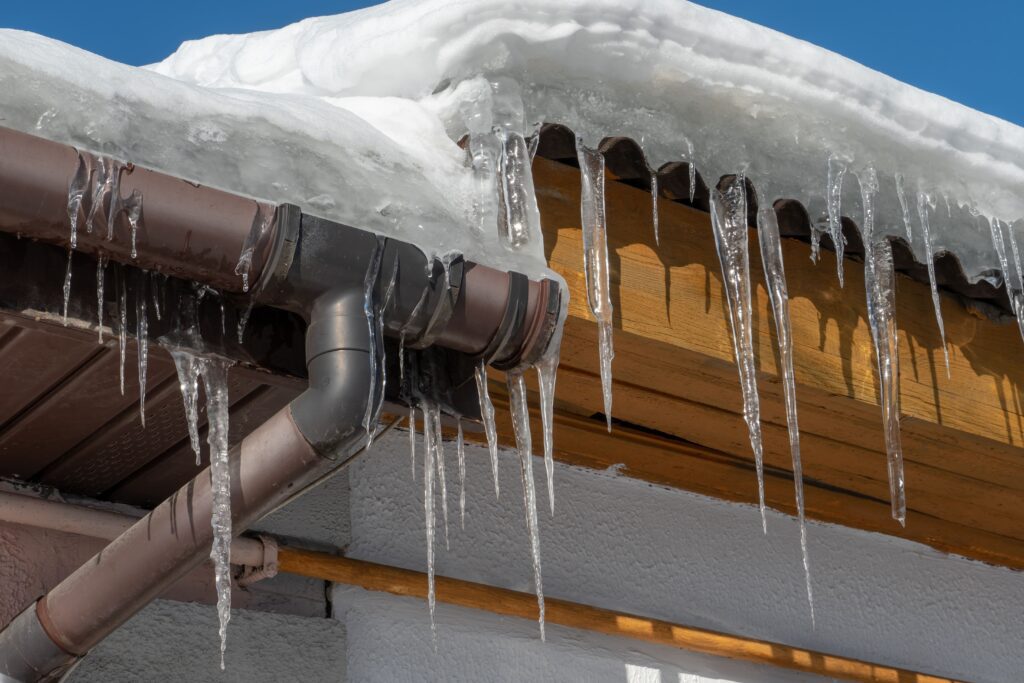
Frozen gutters can pose a risk to you and your home. As ice and snow accumulate, they add significant weight to your gutters, which can pull them away from the fascia, leading to sagging or complete detachment. That means costly repairs.
But that’s not all. Ice dams that form in your gutters can force water under your shingles, causing roof leaks and potentially damaging the structure. Left unchecked, this can lead to extensive water damage to your soffits, siding, and even your home’s foundation.
Frozen downspouts make things worse by backing up water into your home, causing damage to your walls, ceilings, and flooring. Worst-case scenario? This leads to mold growth or interior water stains.
How to Prevent Gutters from Freezing (Best Practices)
There are several simple and effective ways to prevent frozen gutters in the winter. Let’s explore the best practices for keeping your gutters in top shape.
Keep Gutters Clean Before Winter With Gutter Maintenance
Fall debris is one of the top causes of frozen gutters. Leaves, twigs, and other materials can easily clog gutters, trapping water that will freeze once temperatures drop. It’s essential to clean your gutters before the first hard freeze. If you’re not comfortable doing this yourself, consider professional gutter cleaning services.
Along with gutter cleaning, winter roof maintenance helps prevent issues like ice dams that could exacerbate gutter freezing.
Make Sure Gutters and Downspouts Drain Properly
Proper drainage is key to preventing frozen gutters. Gutter slope plays an important role in ensuring water flows freely towards the downspouts. Gutters that aren’t properly sloped can trap water, which may freeze and lead to ice buildup.
It’s equally important that your downspouts fully drain water away from your home. Frozen downspouts contribute to ice buildup in gutters, causing a vicious cycle that’s difficult to break. You can prevent this by ensuring your downspouts direct water at least 3-4 feet away from the foundation.
Improve Attic Insulation and Ventilation
Many frozen gutter problems actually begin on the roof. When warm air escapes from the attic, it melts the snow on the roof and then refreezes at the eaves. The result is often the formation of dangerous ice dams.
By improving attic insulation and ensuring proper ventilation, you can reduce the risk of this happening. This will keep the temperature in your attic consistent, preventing the melting-and-refreezing cycle that causes ice dams.
Focus on Structural Gutter Freeze Prevention
Proper gutter installation and maintenance of your gutters are crucial in preventing freezing.
- The gutter slope should be checked to eliminate standing water.
- Gutter attachment must be secure to avoid sagging and pooling.
- Downspout placement is also important—extensions should be positioned to drain water away from the home.
- Be sure to identify low spots in your gutters where water tends to accumulate and freeze.
What NOT to Do When Trying to Prevent Frozen Gutters
When it comes to preventing frozen gutters, some common methods can actually cause more harm than good. Here’s a list of frozen gutter don’ts:
- Don’t hammer or chip ice: While this may break some of the ice, you can inadvertently damage the gutter system, only making problems worse.
- Don’t use rock salt or harsh chemicals: These can corrode gutters and harm your landscaping.
- Don’t pour boiling water repeatedly: While it may temporarily melt ice, it can also crack your gutters due to the sudden, rapid temperature change.
- Don’t climb ladders in icy conditions: Climbing on ladders is risky by itself, but add ice to the mix, and the risk for serious injury skyrockets.
What to Do If Your Gutters or Downspouts Are Already Frozen
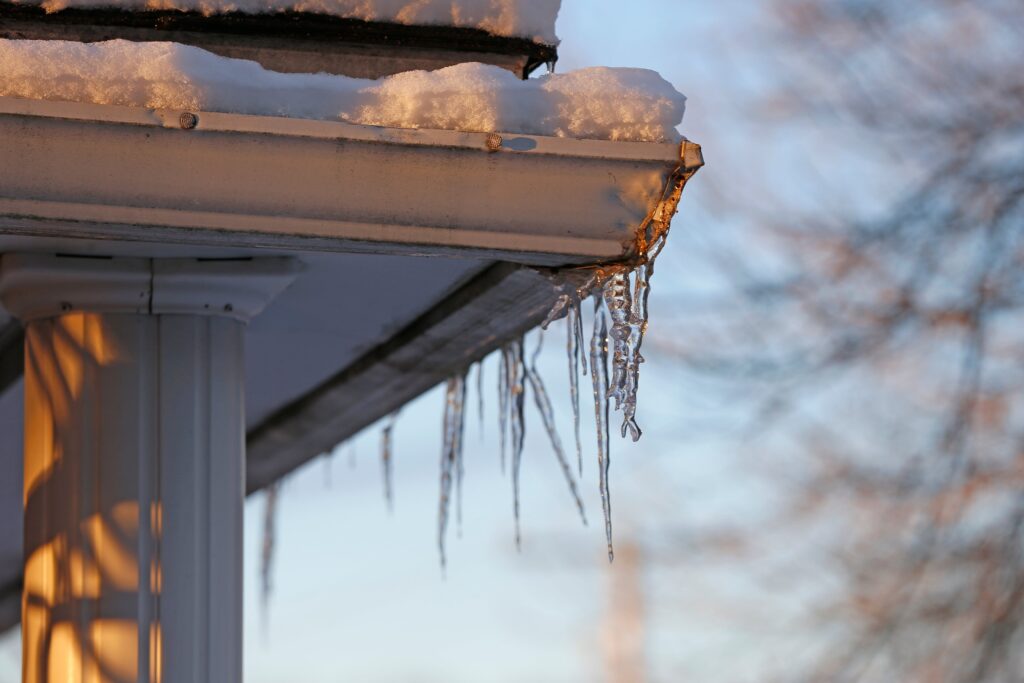
If your gutters or downspouts are already frozen, the first step is to assess the situation. In some cases, it’s okay to wait out the freeze, especially if the blockage is minor. However, if you notice sagging gutters, leaks, or interior water stains, it’s time to take action.
When ice becomes a structural concern, don’t hesitate to contact a professional to remove the ice and prevent further damage.
When to Call Bluegrass Roofing for Professional Ice Dam & Gutter Repair
Recurring issues with frozen gutters and ice dams can quickly escalate into severe damage. Ice and snow can weigh down your roof, gutters, and foundation, leading to costly repairs if not addressed. If you notice visible damage or ice dams forming despite your gutters being spotless, it’s time to call in the experts.
Bluegrass Roofing specializes in professional ice dam repair and gutter repair services, ensuring your gutters stay clean and clear when the cold hits. Give our experts a call today to keep your gutters, your home, and you safe this winter.
Frozen Gutters FAQs
Start by cleaning your gutters to remove debris that can trap water. Ensure proper drainage and slope, improve attic insulation to reduce heat loss, and remove snow buildup along the roof edge. Routine maintenance and proper gutter installation are also key to preventing gutters from freezing.
Even if your gutters are clean, downspouts can still freeze if the slope isn’t correct or if water is trapped in underground extensions. Any clog or bend in the downspout can prevent water from flowing freely, causing it to freeze.
Gutter guards help by keeping debris out, but they don’t prevent freezing on their own. If your gutters are clogged or improperly sloped, water can still build up and freeze. Regular maintenance and proper drainage are still key to preventing frozen gutters.
Yes, frozen gutters can lead to ice dams that prevent proper water drainage. This trapped water can seep under shingles, causing leaks and potentially leading to significant roof damage if left unaddressed.
No, it is not safe. While salt and ice melt do a great job of clearing ice away on the pavement, the chemicals used can corrode your gutters and directly harm your landscaping. Instead, stick to keeping your gutters clean and clear of debris.